Digital Concept Design

VitaLink

A continuous, intraoral early warning system for metabolic health.

My Role

3D CAD Modeling & Electronic Component Architecture

Project Status

Theoretical Prototype (Digital)

Note

All hardware and logic architectures were developed as a digital design. No physical manufacturing or human trials were conducted during the project.
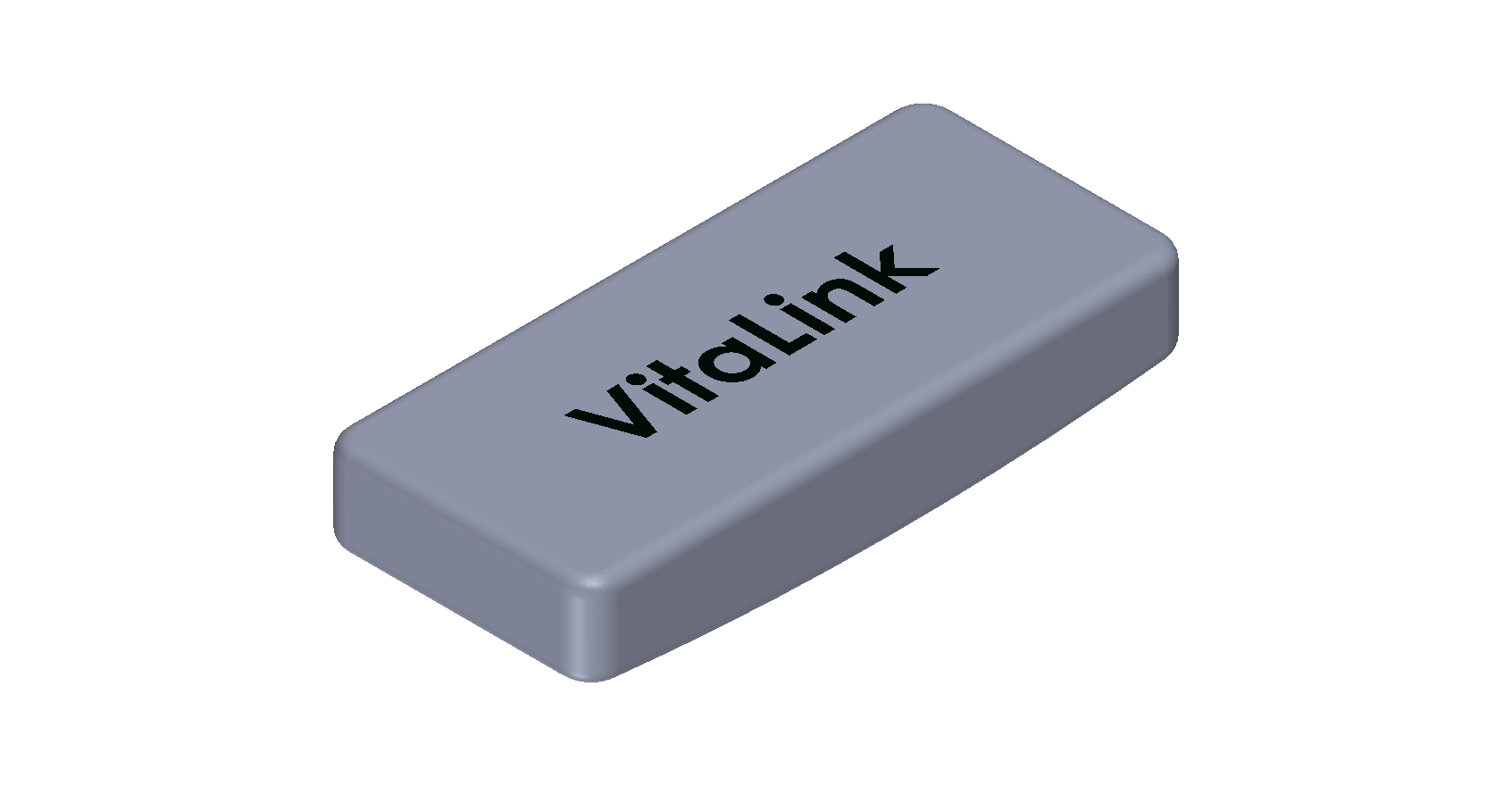
VitaLink Exploded View

Product View

From Reactive to Preventive

Current healthcare models are reactive. We rely on occasional tests and doctor visits that only capture a brief snapshot of our well-being. By the time symptoms appear for metabolic or nutritional conditions, the critical window for prevention has often passed.

VitaLink was conceptualized to solve this data gap. It is a theoretical design for an ultra-compact, smart sensor placed securely inside the mouth. Instead of relying on manual reporting, VitaLink continuously monitors general metabolic indicators—specifically core thermal changes and eating habits. By tracking jaw movements, chewing cycles, and temperature over time, the system establishes a unique biological baseline for the user, triggering early warnings when deviations occur.

CAD & Electronic Architecture

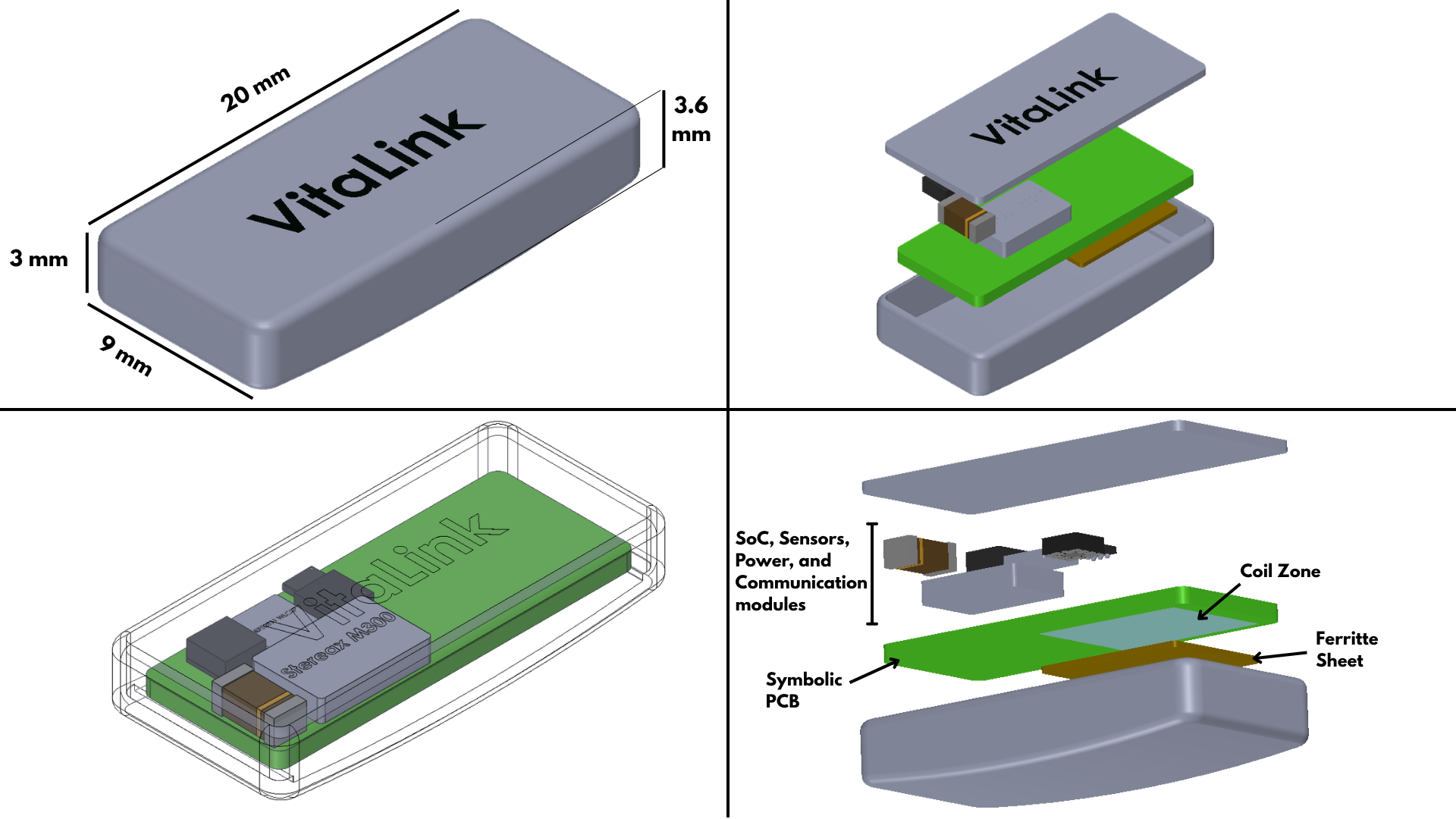
My primary responsibility was designing the hardware layout and the physical structure of the device. Using 3D CAD modeling, I engineered the internal component architecture to ensure the battery, sensors, and communication modules fit perfectly within a strict 20mm x 9mm x 3mm physical footprint. Since this is an intraoral device, optimizing the spatial layout without compromising safety was the ultimate challenge.

Power & Charging

Traditional batteries are unsafe for oral use. I integrated a Stereax M300 solid-state thin-film battery into the CAD model. This chemistry is inherently leak-proof and highly stable. For charging, I layered a wireless induction coil over a ferrite sheet, allowing the 3mm thin device to be completely sealed without external ports.

Sensing Modules

To gather metabolic data, I selected the BMA400 Acceleration Sensor to track jaw movements, chewing cycles, and meal durations. Alongside it, the TMP117 Digital Temperature Sensor provides medical-grade core thermal tracking with a precision of 0.1°C, all mounted on a high-density Symbolic PCB.

Encapsulation & Layout

Because the PCB and micro-components sit directly in the user's mouth, the entire assembly must be encapsulated in Parylene-C. This medical-grade coating creates an ultra-thin, moisture-proof barrier.

The structural layout relies on stacking the components vertically. The induction coil and ferrite sheet form the base, topped by the Symbolic PCB housing the SoC and sensors, completely optimizing the 9mm width constraint.

VitaLink Product Layout

Product Structure

Software Architecture

Wake-on-Activity Logic

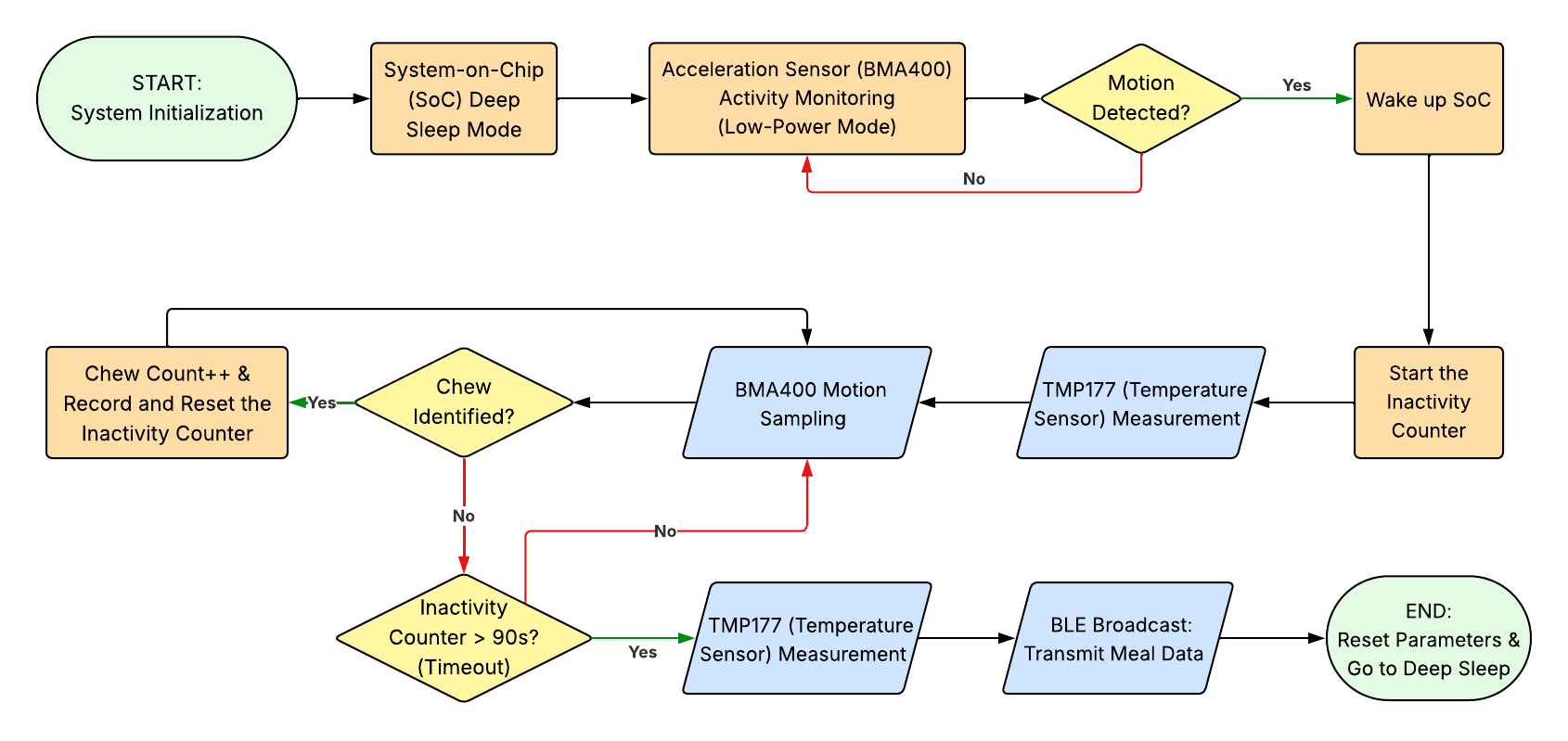
Due to the extremely limited battery capacity of micro-devices, the system cannot afford to run continuously. I designed a "Wake-on-Activity" flowchart to manage power consumption strictly.

By default, the System-on-Chip (SoC) remains in Deep Sleep Mode. The BMA400 sensor operates alone in a low-power state, monitoring for specific jaw motions. Once a chewing pattern is identified, it wakes the main processor.

Only then does the system take temperature measurements and transmit the meal data via a BLE (Bluetooth Low Energy) broadcast to the user's mobile device. If no motion is detected for 90 seconds, the system resets and returns to deep sleep, massively extending battery life.

Wake-on-Activity Flowchart

Sensor Flowchart