Digital Prototype
EnergyCore
Portable Emergency Power for Electric Vehicles.
My Role
Physical Calculations & Design
Project Timeline
2024 - 2025
Core Focus
Portability and Emergency Power Supply

Digital Prototype
Portable Emergency Power for Electric Vehicles.
Physical Calculations & Design
2024 - 2025
Portability and Emergency Power Supply
The adoption of electric vehicles (EVs) is accelerating, but infrastructure is struggling to keep pace. Range anxiety remains a significant barrier. When a combustion engine runs out of fuel, a simple jerrycan solves the problem. When an EV battery runs out of charge away from a charging station, the vehicle is entirely immobilized.
EnergyCore was conceptualized to fill this gap. We set out to design a portable, high-density power bank capable of providing an emergency 45-50 km range extension to EVs. To ensure our engineering constraints reflected real-world demands, we built our computational models around the Tesla Model Y, analyzing its consumption data to determine our baseline energy requirements.
Target Range Extension
45 - 50 km
Required Capacity
~7.5 kWh
Target Weight
≤ 30 kg
Optimized for manual portability.
My Contribution
My core responsibility in this project wasn't just sketching shapes; it was proving that the mathematics of the battery pack made physical sense. A portable EV charger is a highly complex system, and designing a digital prototype required strict adherence to physics.
After evaluating multiple battery chemistries, I directed the design toward NMC (Nickel Manganese Cobalt) Lithium-ion cells, specifically selecting the LG Energy Solution 21700. This cell provided the optimal balance of high energy density (4800mAh per cell).
To achieve the architecture standard in modern EVs while maintaining a portable form factor, I calculated a 95s5p configuration (95 cells in series, 5 parallel groups). This 475-cell structure yielded the necessary capacity while keeping the design within our weight and volume constraints.

Physical Calculations
While EnergyCore is a comprehensive digital prototype, the design process started at the micro-level. Rather than immediately sketching the entire outer shell, I began by drawing out the individual internal units and cooling structures on my tablet.
These component-level sketches were critical for determining internal ergonomics and weight distribution. By defining the exact dimensions, spacing of the cell modules, and hardware placement first, the exterior casing naturally took shape around the engineering constraints—completing the final 3D digital assembly.
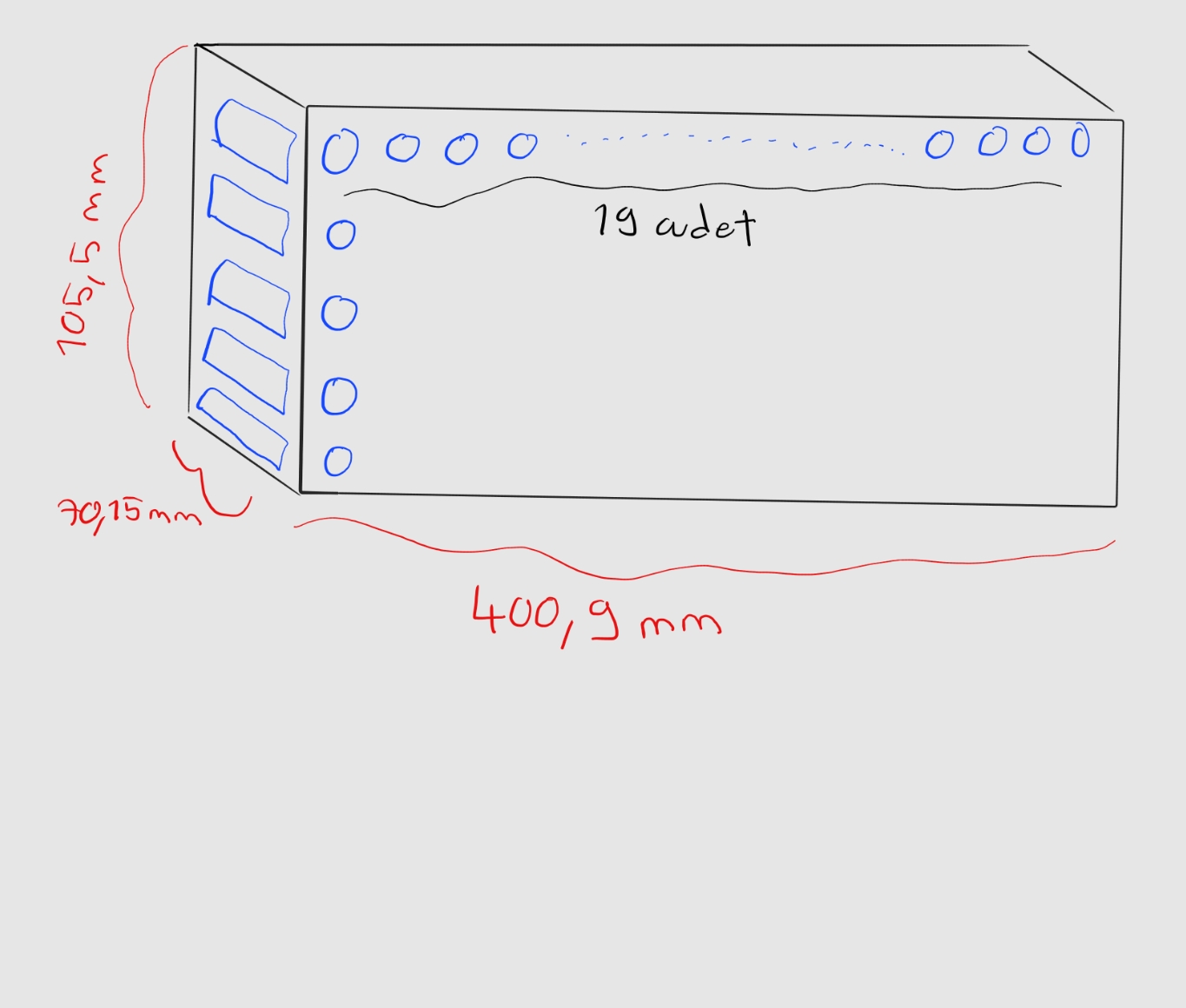
Unit Sketch
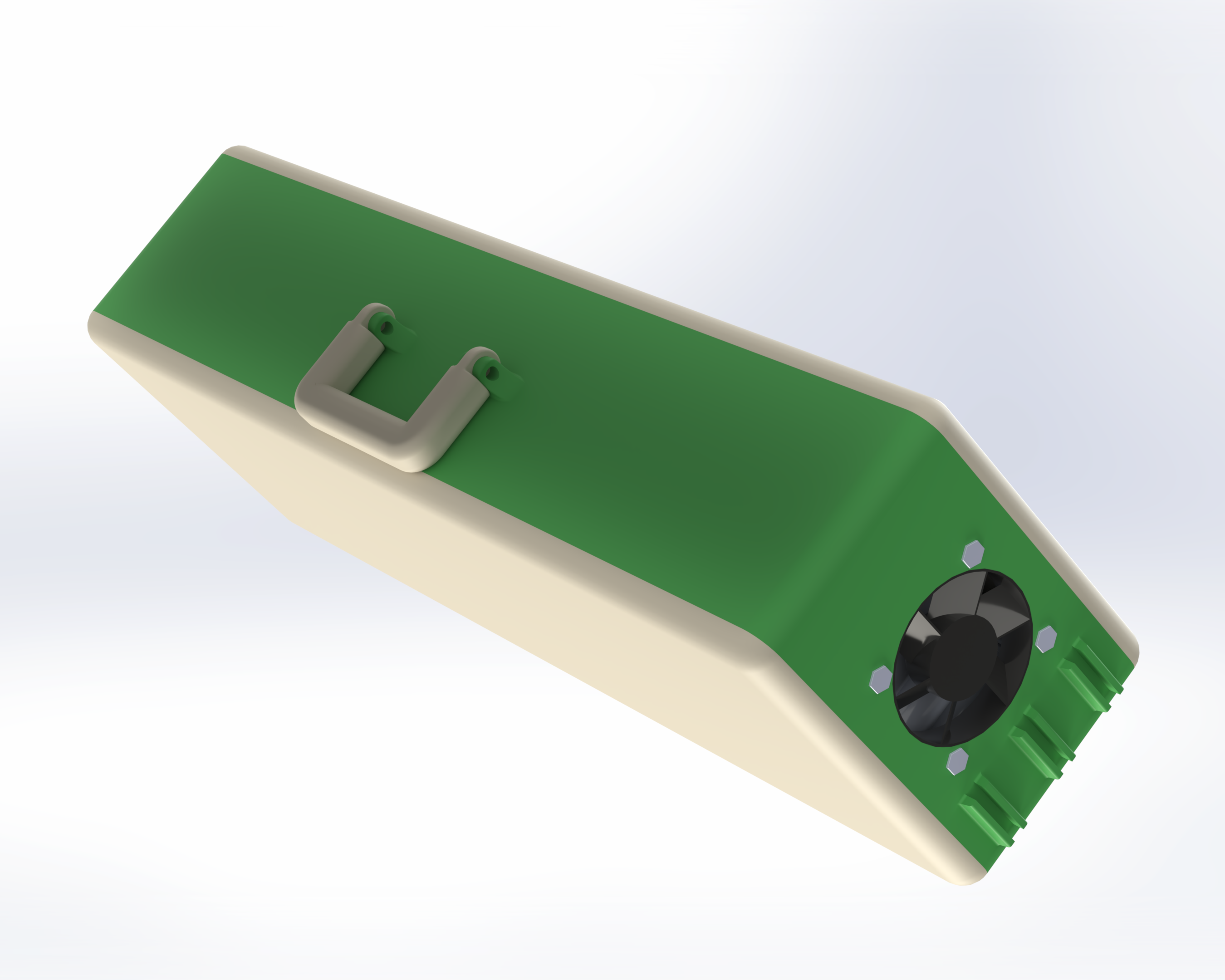
Unit 3D Model
Translating the raw calculations into a viable digital CAD model required solving significant material and thermal constraints.
Packing 475 high-capacity cells into a confined space generates immense heat during DC discharge. We specified the integration of active cooling fans and engineered airflow channels in the digital model to maintain continuous heat dissipation and prevent thermal runaway.
To keep the unit as light as possible without sacrificing impact resistance, the exterior casing was modeled using PP-C (Polypropylene Copolymer).
The interface was designed around a built-in CCS Type 2 Connector. To handle the output efficiently, the internal cell architecture was modeled to minimize electrical resistance and optimize fast-charging protocols.
What I learned from engineering a high-density power system.
Designing this digital prototype taught me that real engineering is defined by limits. Anyone can draw a battery box; calculating that specific cells require active thermal management and precise spacing is what turns a drawing into a viable model.
Gained a deep understanding of why the EV industry relies on NMC and LFP chemistries, balancing energy density (kWh/kg) against volatility and raw material costs.
Learned to select structural materials based on their specific physical properties—using PP-C for impact absorption in high-stress environments and heat resistance for thermal management.
Realized the importance of thorough mathematical validation before physical manufacturing begins. A well-calculated digital model eliminates expensive failures on the production floor.