FRC Team 6429
4th Dimension

"Gears Only Work When Together"

Role

CAD Sub-Team Member

Seasons

2026 REBUILT

Skills Applied

SOLIDWORKS CAD, Rapid Prototyping, Systems Integration, Mechanical Assembly, Under-Pressure Problem Solving

More than robots. FIRST Robotics Competition (FRC) is a global engineering challenge where high school teams design, machine, and program industrial-size robots in two months, simulating a strict, real-world engineering and business environment.
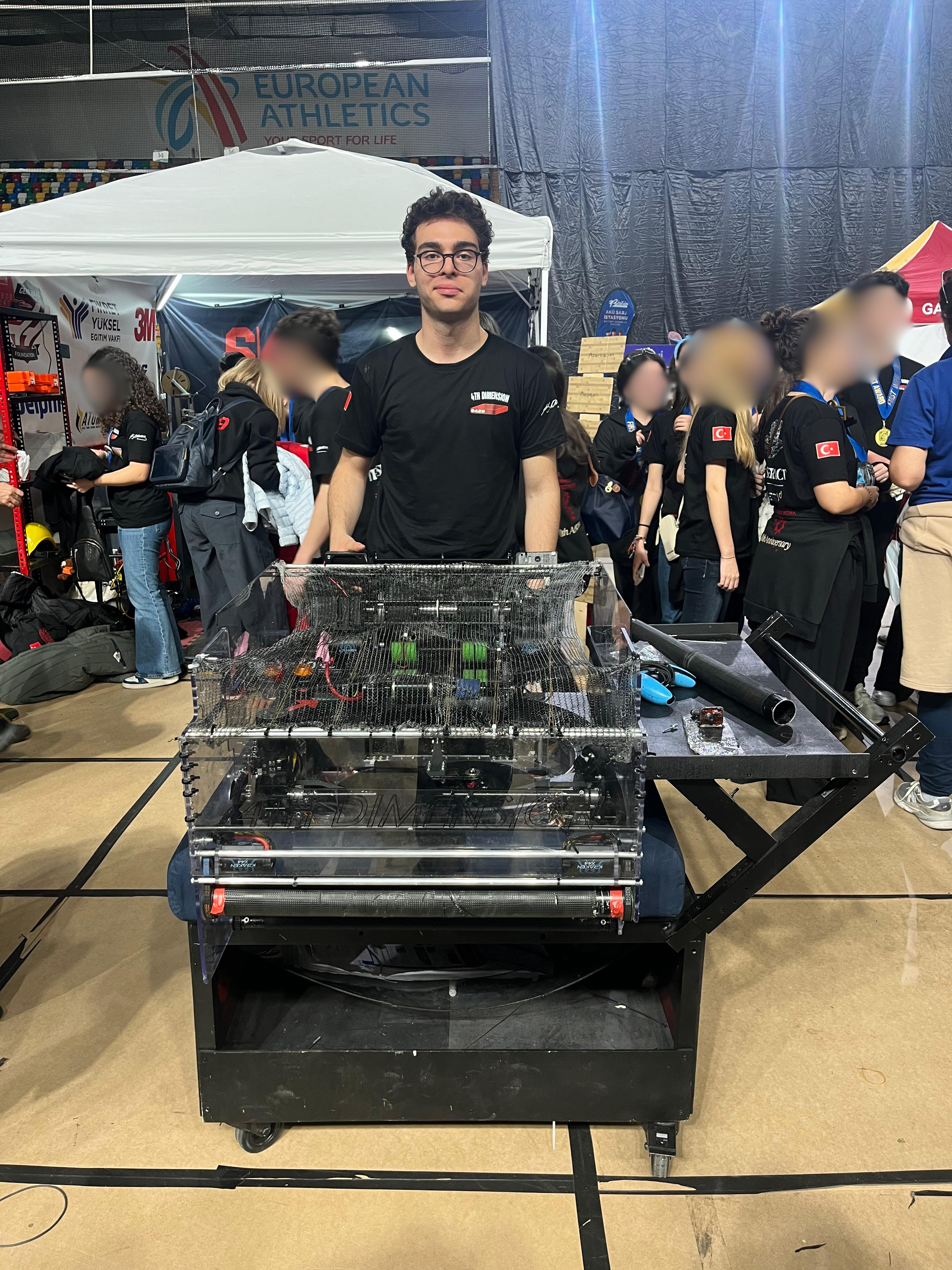
Engineering team collaborating
Student thinking about engineering

How FRC Changed My Perspective on Engineering

Engineering is not just about making things look good on a screen; it is about making them work in reality. FRC taught me that the best design is not always the most complex one—it's the one we can actually manufacture, maintain, and rely on when a match is on the line.

I learned to look past the CAD geometry and think about the system as a whole. That meant constantly asking myself how parts would be machined, how the team would assemble them, and how they would hold up to the physical beating they take on the field. It changed the way I approach every technical problem.

My Role in Team 6429

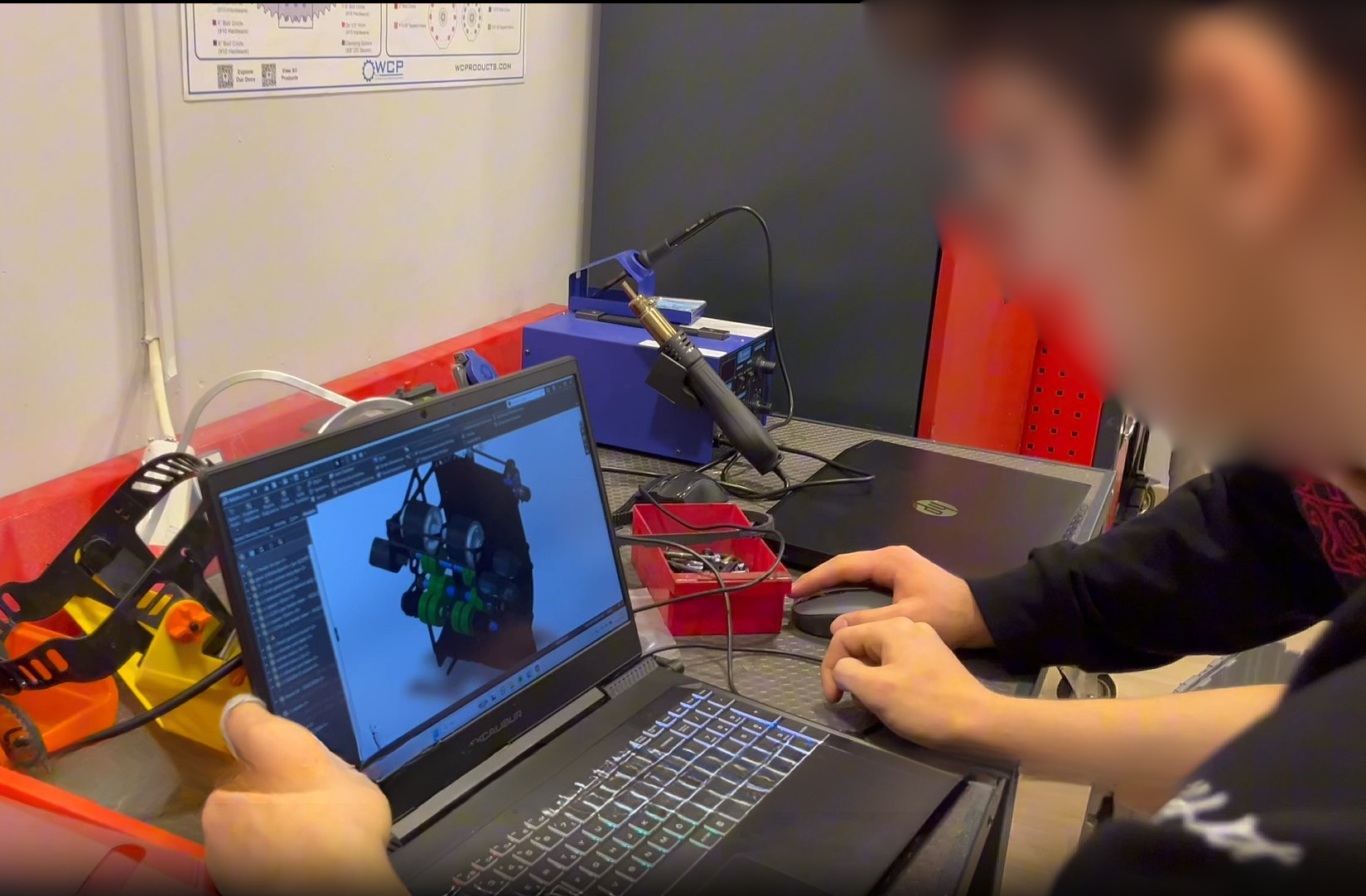
As a CAD Team Member for Team 6429, my focus was turning our team's strategy into reliable mechanical solutions. Throughout the season, I designed and iterated subsystems in SOLIDWORKS, always weighing the trade-offs between what looked good in theory and what we could actually manufacture with our resources.

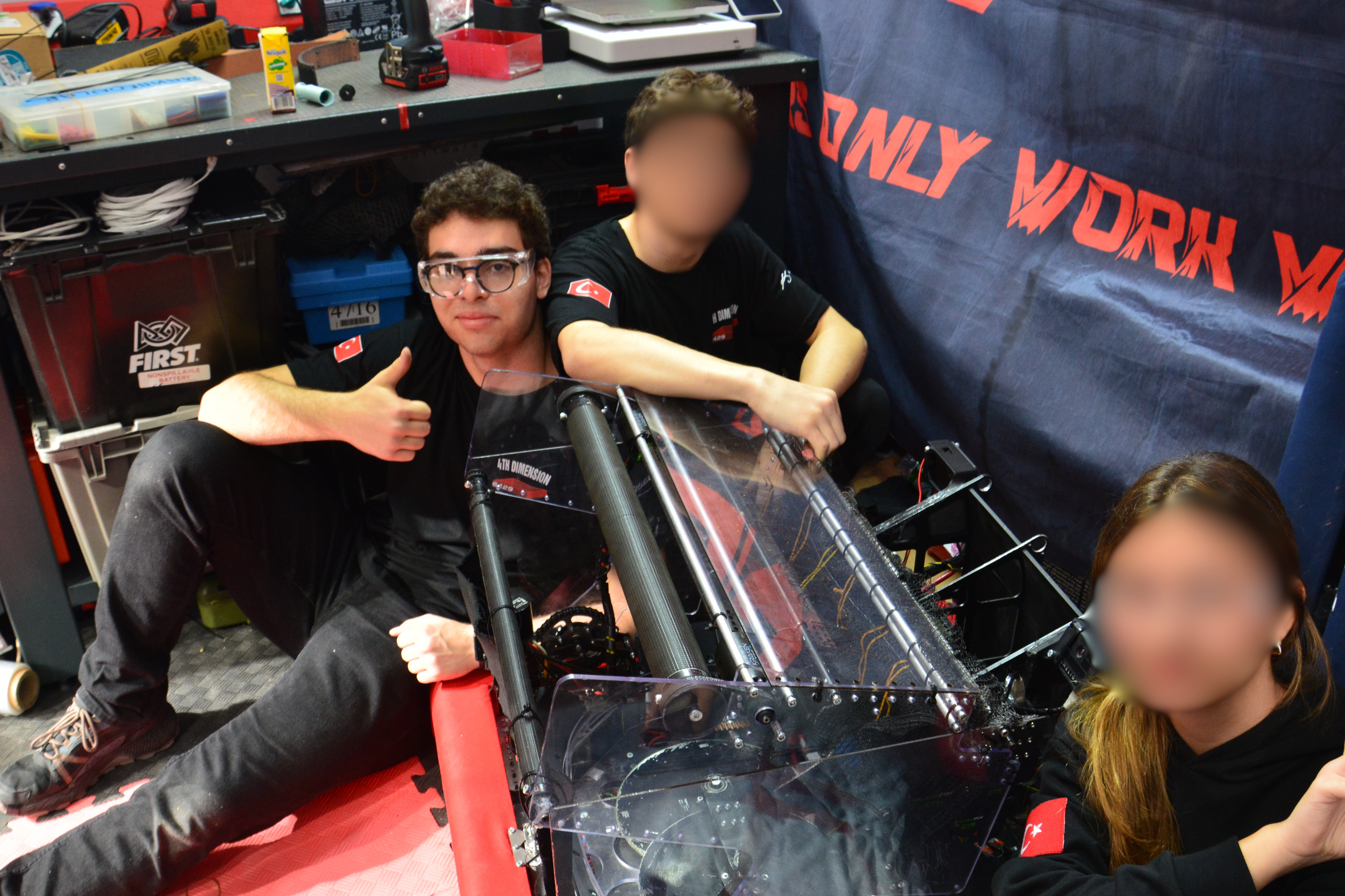
My role did not stop at the computer. I worked directly with the assembly, electronics, and programming teams to build, integrate, and test our prototypes.

The pace of FRC is relentless, but it taught me how to make quick, effective decisions under pressure and continuously refine a design until it performs consistently.

CAD Design and iteration
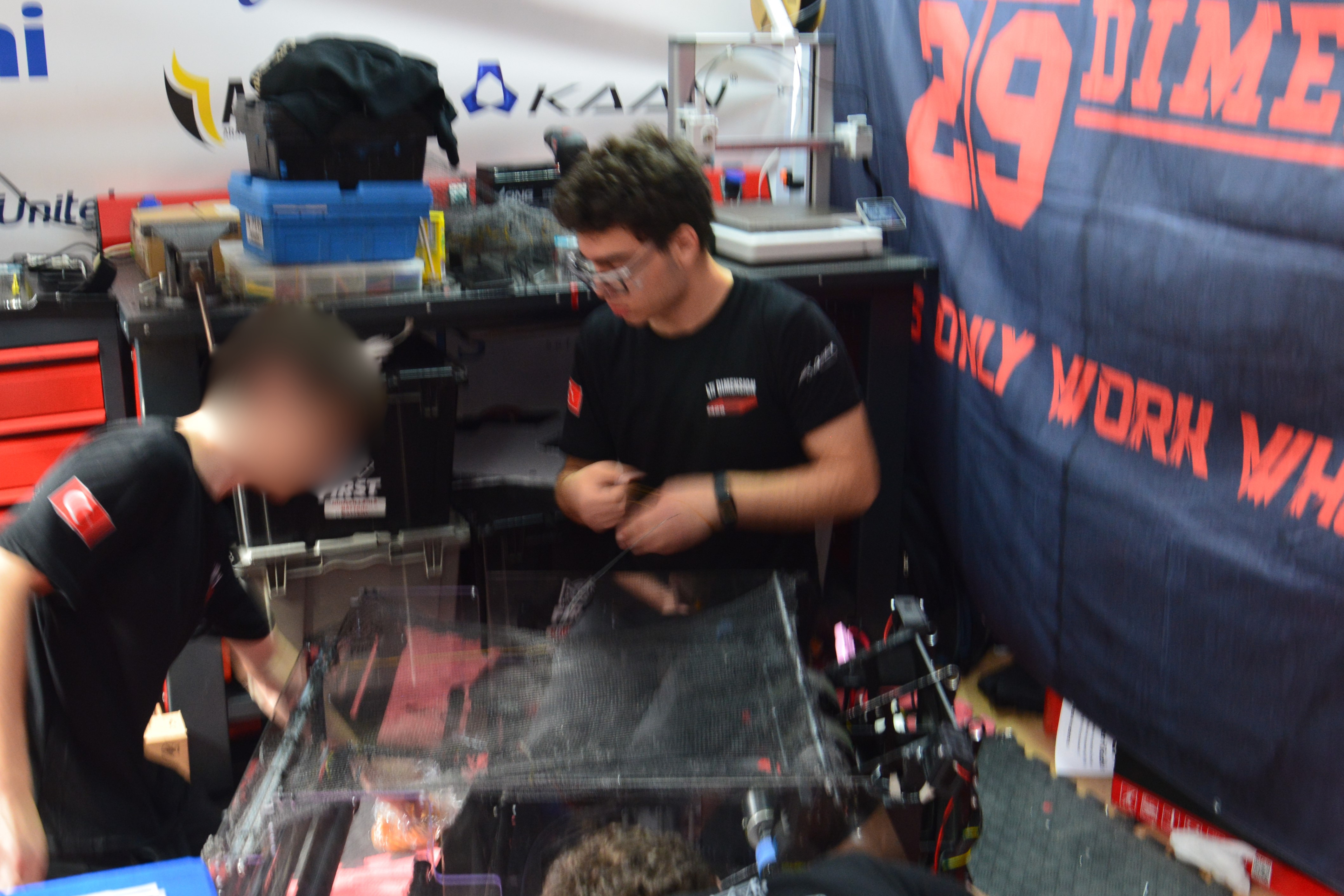
Gritty workspace and tools
Intense team coordination

Inside the Pit

The pit at the Haliç Regional was the ultimate reality check. It’s a loud, high-stakes environment where you simply don't have the luxury to overthink.

If a mechanism breaks between matches, you have an unpredictable window—sometimes 30 minutes, sometimes 15, or even less—to diagnose the issue and get the robot back on the field. As someone specifically assigned to pit duty, working in this environment taught me how to think systematically under pressure, prioritize high-impact decisions, collaborate effectively, and solve technical problems when every minute mattered.

It’s rarely about executing a perfect, textbook fix; it’s about making calculated decisions and getting the job done when it matters most.

The 2026 REBUILT Season

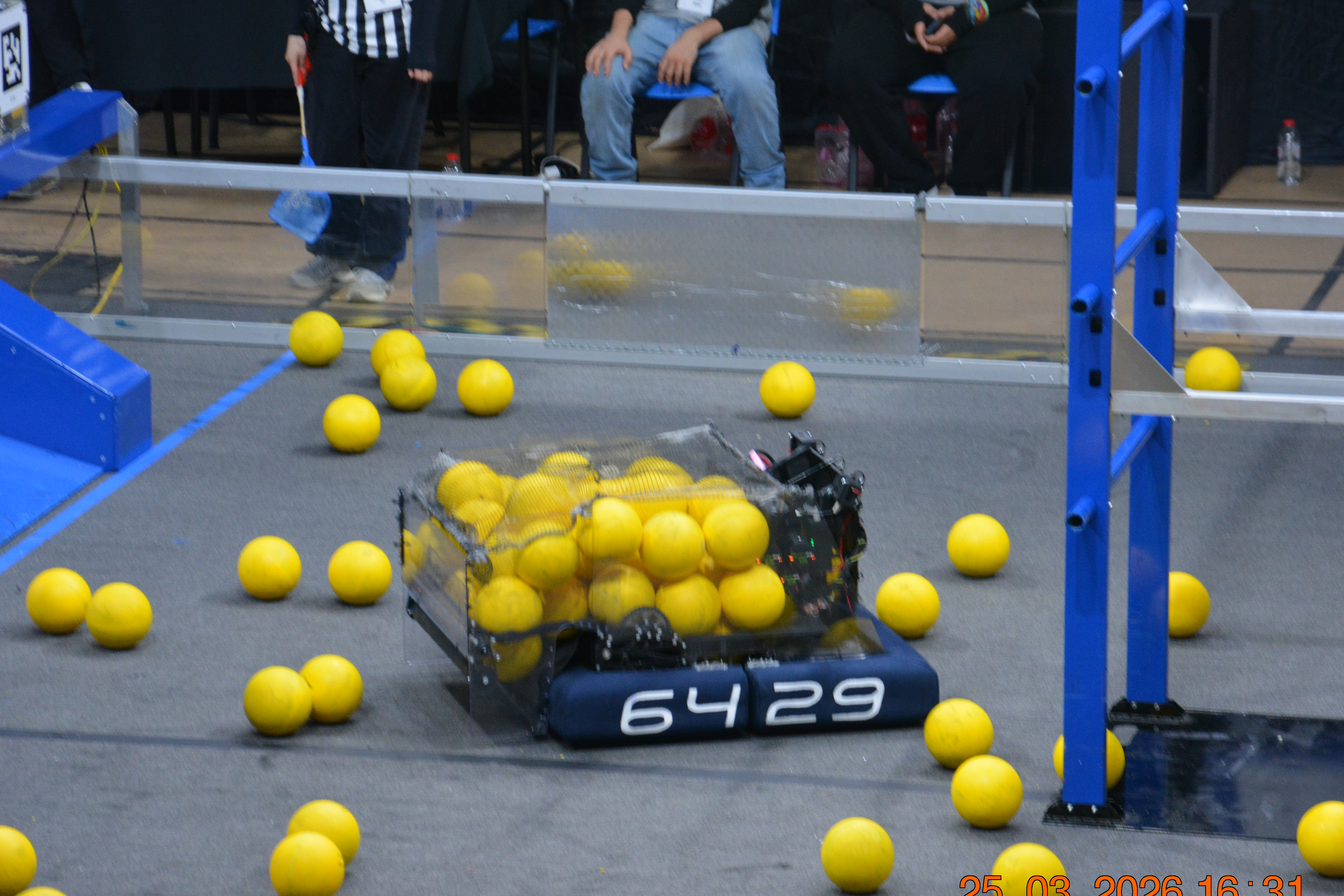
The 2026 REBUILT game was a massive puzzle. The goal was to collect foam FUEL elements and score them into elevated HUBs, then climb a towering structure at the end of the match. The catch? The scoring zones constantly shifted during the game, forcing us to be incredibly efficient and cycle fast when our HUB was active.

Strategic Hurdles

Every decision we made had to balance speed, reliability, and the physical constraints of the field. We had to optimize our cycle times to maximize throughput without getting stuck or drawing penalties.

Engineering Constraints

  • Weight & Height: Robots were strictly capped at 52 kg (excluding battery and bumpers) and could not exceed a starting height of 76 cm.
  • Expansion Limits: Mechanisms could only extend 30 cm beyond the frame perimeter, and strictly in one direction at a time.
  • Terrain & Trade-offs: The field's neutral zone featured 16.5 cm tall bumps and trenches with only a 56.5 cm vertical clearance. This forced a critical choice: build tall to hold more FUEL but slowly cross the bumps, or build extremely low to speed through the trenches with less hopper capacity. We chose the trench.

Meet Tesseract

Our solution to REBUILT.

Industrial mechanism representing Tesseract

Final Build

Chassis: Swerve Drive

We went with a swerve drive to effortlessly weave through the field, dodge defenders, and align perfectly with the scoring zones.

Intake & Routing

A low-profile pivot intake let us sweep up FUEL quickly and slip under the tight field trenches. Inside, a dual-spindexer kept the pieces moving smoothly without jamming.

Scoring: Double Shooter

We built a double shooter to empty our hopper into the HUB as fast as possible during our active scoring windows.

The Strategic Trade-off

We prioritized rapid cycling over everything. We intentionally skipped the climber to spend the final seconds scoring FUEL, and designed a low-profile chassis to speed through the trenches—sacrificing hopper volume for much faster field traversal.

Awards

Recognition of our holistic approach to engineering, community outreach, and technical documentation during the 2026 season.

2026 Haliç Regional

FIRST Impact Award

2026 FIRST Championship (Galileo)

Engineering Inspiration Award

Sponsored by SpaceX

Key Takeaways

The core competencies I built beyond the CAD screen.

Systems Thinking

Realizing that moving a mounting hole in CAD shifts the center of gravity, altering the software team's autonomous tuning.

Design Under Constraints

Learning to operate effectively when creativity is bounded by strict weight limits, dimensions, and physics.

Rapid Iteration

Embracing failure as data. Identifying mechanical flaws quickly to fix them before the next meeting.

Technical Communication

Developing the vocabulary to accurately explain complex mechanical problems to peers and judges.

Manufacturing Awareness

Understanding that a CAD model is functionally useless if it cannot be machined or assembled with our specific tools.

Teamwork

Building something far larger and more complex than any single student could achieve alone.

FRC did not make me an engineer, but it gave me the exact foundation I needed to become one.

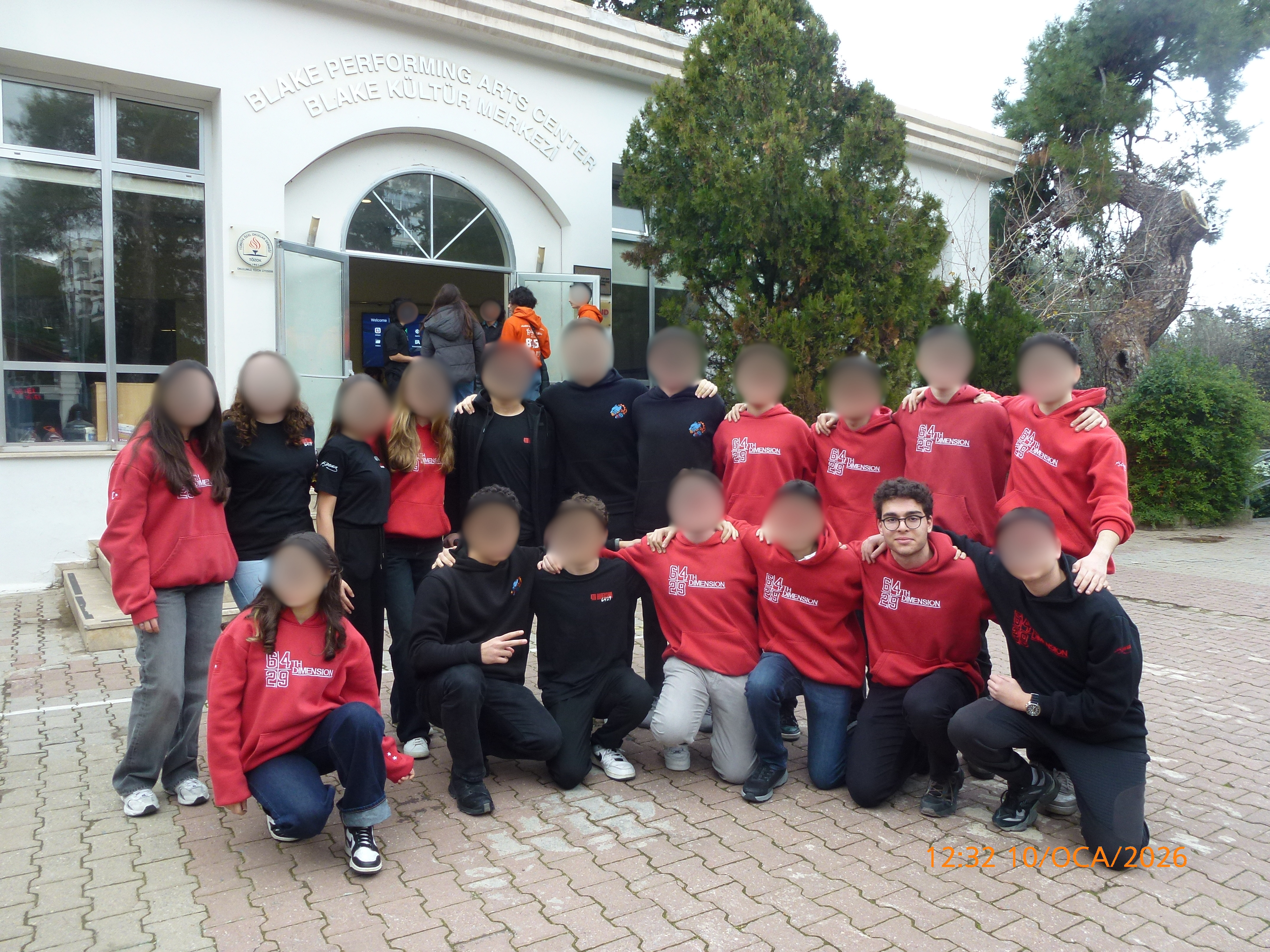
Large team group photo

Interested in learning more about Team 6429?

Explore the mission, outreach activities, competition history, and the deep-rooted engineering culture behind 4th Dimension.

Visit Team 6429 →